Australia’s unemployment rate declined to 4.2% in December, and it could fall further (below 4%) in the coming year, barring further waves of COVID or other global shocks. This has some forecasters predicting a quick acceleration in wage growth — which has been stuck for almost a decade now at the slowest pace in Australia’s postwar history.
This table compares regulatory and institutional parameters today, compared to fifty years ago. Across multiple dimensions (including the minimum wage, the Awards system, unions and collective bargaining, and job security), workers have lost the bargaining power they need to win higher wages. Hence labour costs remain suppressed, and business profits hit records, even as unemployment declines.
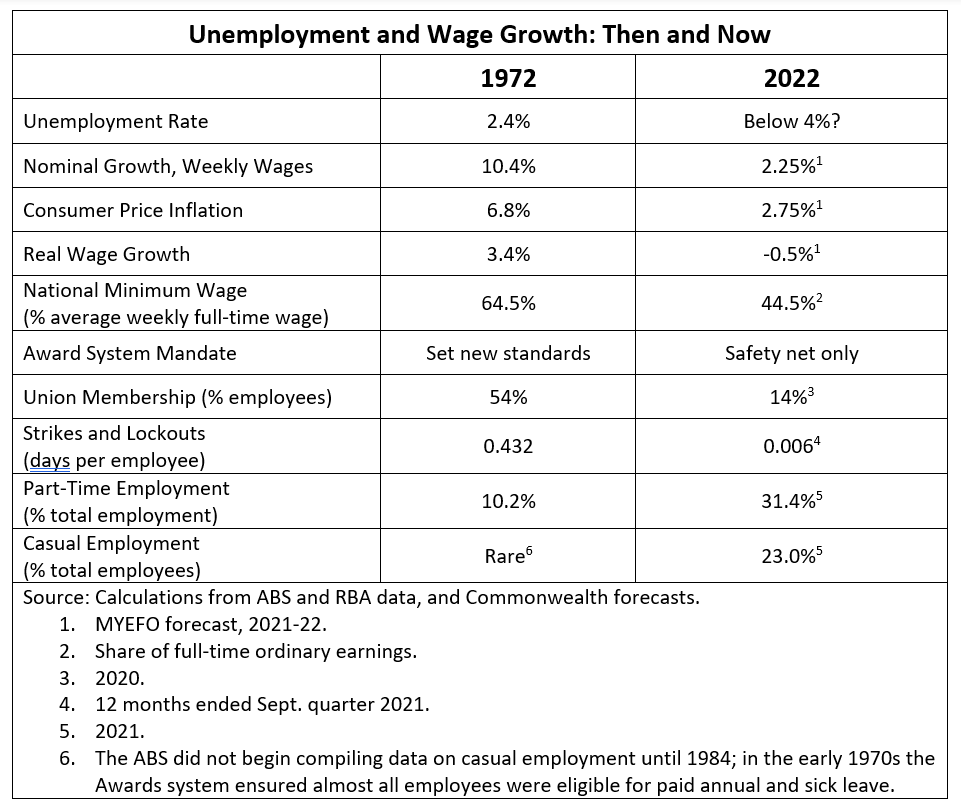 Please see Jim’s full article, “Why there’s no magic jobless rate to increase Australians’ wages,” at The Conversation.
Business representatives sit down today with government and others to talk about productivity. Who, according to those business representatives, will need to change the way they do things?
Minimum and award wages should grow by 5 to 9 per cent this year
Dutton’s nuclear push will cost renewable jobs As Australia’s federal election campaign has finally begun, opposition leader Peter Dutton’s proposal to spend hundreds of billions in public money to build seven nuclear power plants across the country has been carefully scrutinized. The technological unfeasibility, staggering cost, and scant detail of the Coalition’s nuclear proposal have