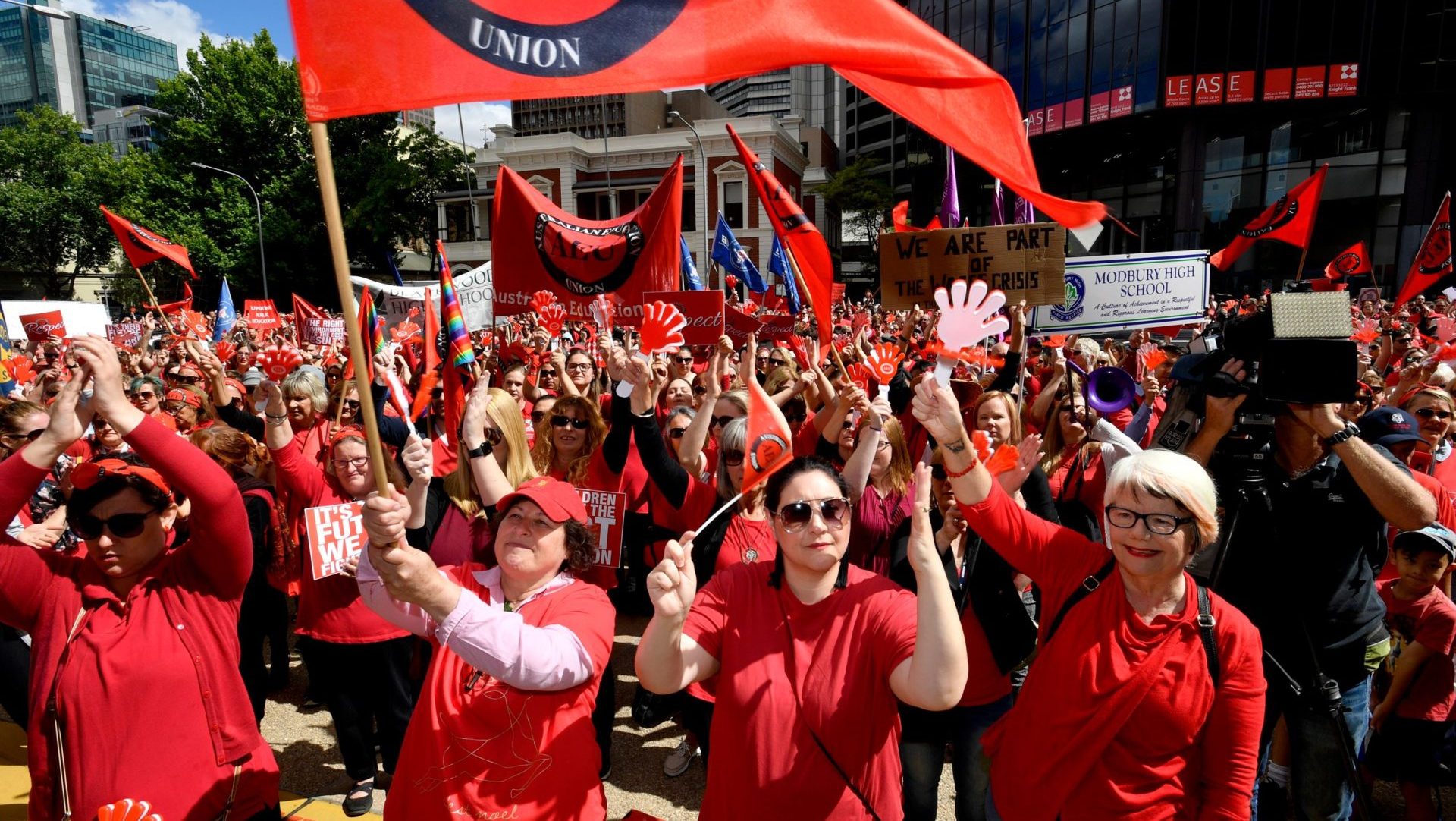
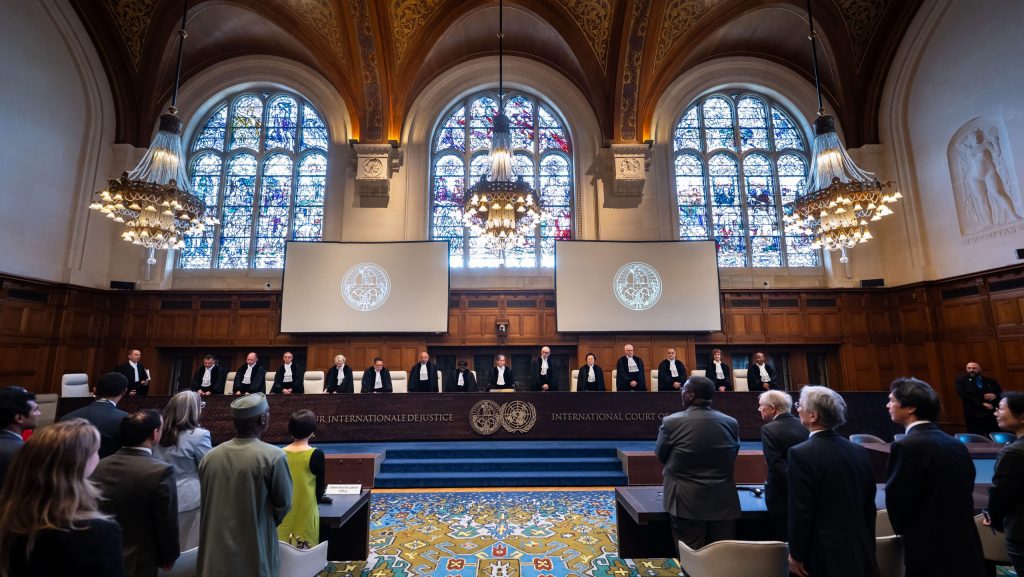
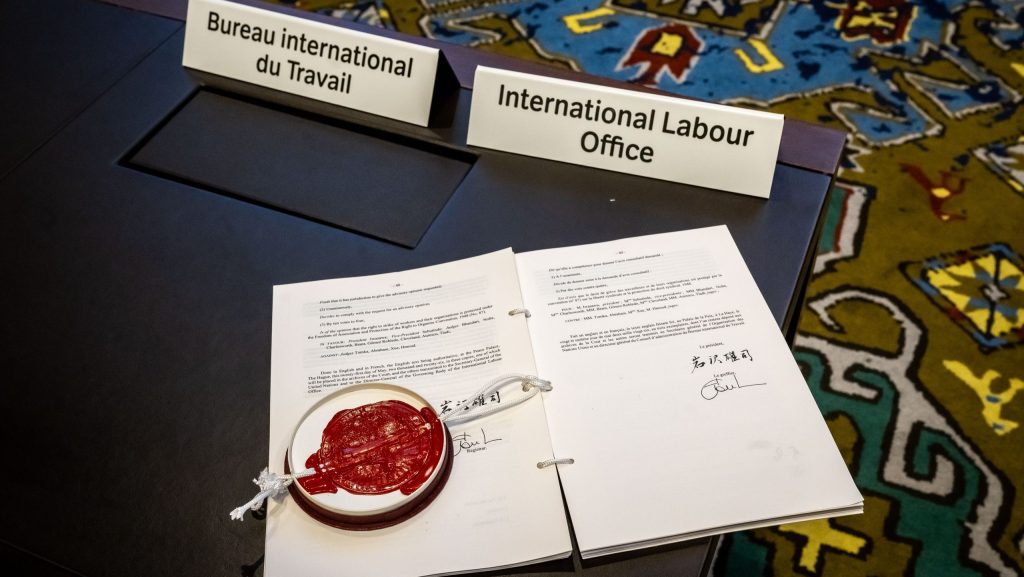
On 21 May 2026, the International Court of Justice (ICJ) decided (10 judges in favour, 4 against) that the right to strike is protected in a key international Convention – the Freedom of Association and Protection of the Right to Organise Convention, 1948 (No. 87).
This is the first time the ICJ has been formally asked (by the International Labour Organization) to make an advisory opinion about an international labour standard since it was founded in 1945 by the United Nations.
The opinion of the ICJ in this case settles a long running global dispute between workers and employers about whether the right to strike is protected in international law.
What are international labour standards?
International labour standards set out agreed minimum standards for workers and employers that should apply throughout the world.
These standards, contained in Conventions, are negotiated between governments, employers and workers through the International Labour Organization (ILO) which is an agency of the United Nations that focusses on work.
If a country ratifies a Convention they are required to include the standards in that Convention in the laws in that country. Australia has ratified many ILO Conventions, including C87.
Convention No. 87
Convention No. 87 says that all workers and employers shall have the right to establish and join organisations of their own choosing (a union or an employer association).
C87 also says that workers and employers should have the right to organise.
These rights are included because the principle of freedom of association (particularly the right to join a union) is recognised as a way of improving conditions of workers and of establishing and maintaining peace.
What’s the problem?
Convention No. 87 doesn’t say anything about the right to strike, however for many years it was recognised in international law that an underpinning principle of the right to form and join a union, and to organise to improve the conditions of workers, was the right of workers to withdraw their labour (to strike).
Since 2012, however, employers around the world have been consistently challenging whether the right to freedom of association and to organise included a right to strike.
This came to a head in 2023 when the Workers Group at the ILO, along with 36 governments, resolved that the ILO should ask the ICJ for an advisory opinion on whether the right to strike was protected under C87.
What does the Court decision mean in Australia?
The advisory opinion of the ICJ has been welcomed by the global union movement, which has emphasised the importance of having this critical issue clarified and the right to strike confirmed in international law.
The opinion of the ICJ is unlikely to have any immediate tangible effect in Australia other than confirming that our workplace laws, which rely in part on C87, reinforce a right to strike.
The ICJ opinion is likely therefore to influence the interpretation of our workplace laws by Australian courts.
However, there may also be a push for further law reform in Australia to ensure that workplace laws reflect this ICJ opinion.
Australia’s right to strike laws are heavily restricted in terms of when workers can strike, over what issues they can strike, and the significant procedural requirements that must been met before they can strike.
Our right to strike laws have been criticised by the ILO as being overly restrictive.
The ICJ opinion may therefore enliven efforts to change our workplace laws to bring them into line with the standards contained in C87, and to include less restrictive rules about when workers can strike.